

On July 4, 2025, the landscape of American payroll changed overnight. The signing of the One Big Beautiful Bill Act (OBBBA) delivered on a major promise to the workforce: "No Tax on Overtime" and "No Tax on Tips."
The new law doesn't just ask you to change a tax table. It asks you to fundamentally rethink how you classify, calculate, and communicate compensation.
At ONEHCM, we believe that compliance isn't just about avoiding penalties—it's an opportunity for Human Connection Management. How you handle this transition will either build deep trust with your workforce or create confusion that erodes engagement.
Here is the high-level guide to what the OBBBA means for your organization and how to turn this regulatory hurdle into a culture win.
What is the One Big Beautiful Bill Act (OBBBA)?
The OBBBA is a federal law designed to increase take-home pay by making certain overtime premiums and tips tax-deductible on a worker’s personal income tax return. While the "No Tax" slogans are the headline, the IRS has defined very specific "Qualified" criteria for both.
What is "Qualified Overtime"?
Under the OBBBA, the deduction applies strictly to the overtime premium mandated by Section 7 of the Fair Labor Standards Act (FLSA).
- The Formula: If an employee earns $20/hour regular pay, their overtime rate is $30/hour.
- $20 is the base rate (taxed at normal rates).
- $10 is the qualified overtime compensation (the "premium" eligible for the deduction).
- Weighted Averages & Shift Differentials: For employees with fluctuating rates (different roles or shift differentials), the OBBBA follows standard FLSA "blended" rules. The "Regular Rate" must be recalculated weekly, and only the resulting 0.5x premium is deductible.
What are "Qualified Tips"?
Tipped workers can now deduct qualified tips from their federal income tax.
- What Qualifies: Voluntary cash or charged tips in occupations that "customarily and regularly" received tips before 2025.
- What Does NOT Qualify: Mandatory service charges or automatic gratuities (unless the customer has the express option to modify them). If the customer can't choose "No Tip," it likely won't qualify.
What Has Actually Changed?

The concept is simple, but the execution requires precision. Here's the breakdown of the new standards:
| Feature | Qualified Overtime | Qualified Tips |
| Annual Deduction Cap | $12,500 ($25,000 Joint) | $25,000 (Per Return) |
| MAGI Phase-Out | Starts at $150k ($300k Joint) | Starts at $150k ($300k Joint) |
| Tax Type Impact | Federal Income Tax Only | Federal Income Tax Only |
| Payroll Taxes | Still subject to FICA/Medicare | Still subject to FICA/Medicare |
1. Strict Limits and Phase-Outs
Even qualified overtime has boundaries:
-
Annual Caps: You can deduct a maximum of $12,500 per year (Single) or $25,000 (Married Filing Jointly). For tips, the maximum is $25,000 per return.
-
Income Phase-Out: The deductions begin to decrease if Modified Adjusted Gross Income (MAGI) exceeds $150,000 (Single) or $300,000 (Joint). It disappears entirely for high earners.
-
Federal Tax Only: Deductions apply only to Federal Income Tax. Social Security and Medicare (FICA) taxes must still be paid on the full amount.
2. The Compliance "Gotchas" for Overtime
Not all extra pay qualifies. If you rely on legacy systems or spreadsheets, these nuances present a significant risk:
-
State vs. Federal: Overtime required only by state law (like California’s daily 8-hour rule) does not qualify unless the employee also exceeds 40 hours for the week.
-
Contractual Premiums: "Double time" for Sundays or holidays (unless over 40 hours) is viewed as a voluntary bonus, not qualified FLSA overtime.
-
Exempt Employees: Any "extra" pay given to salaried, exempt managers does not qualify for the deduction.
What's the Timeline 2025 vs. 2026?
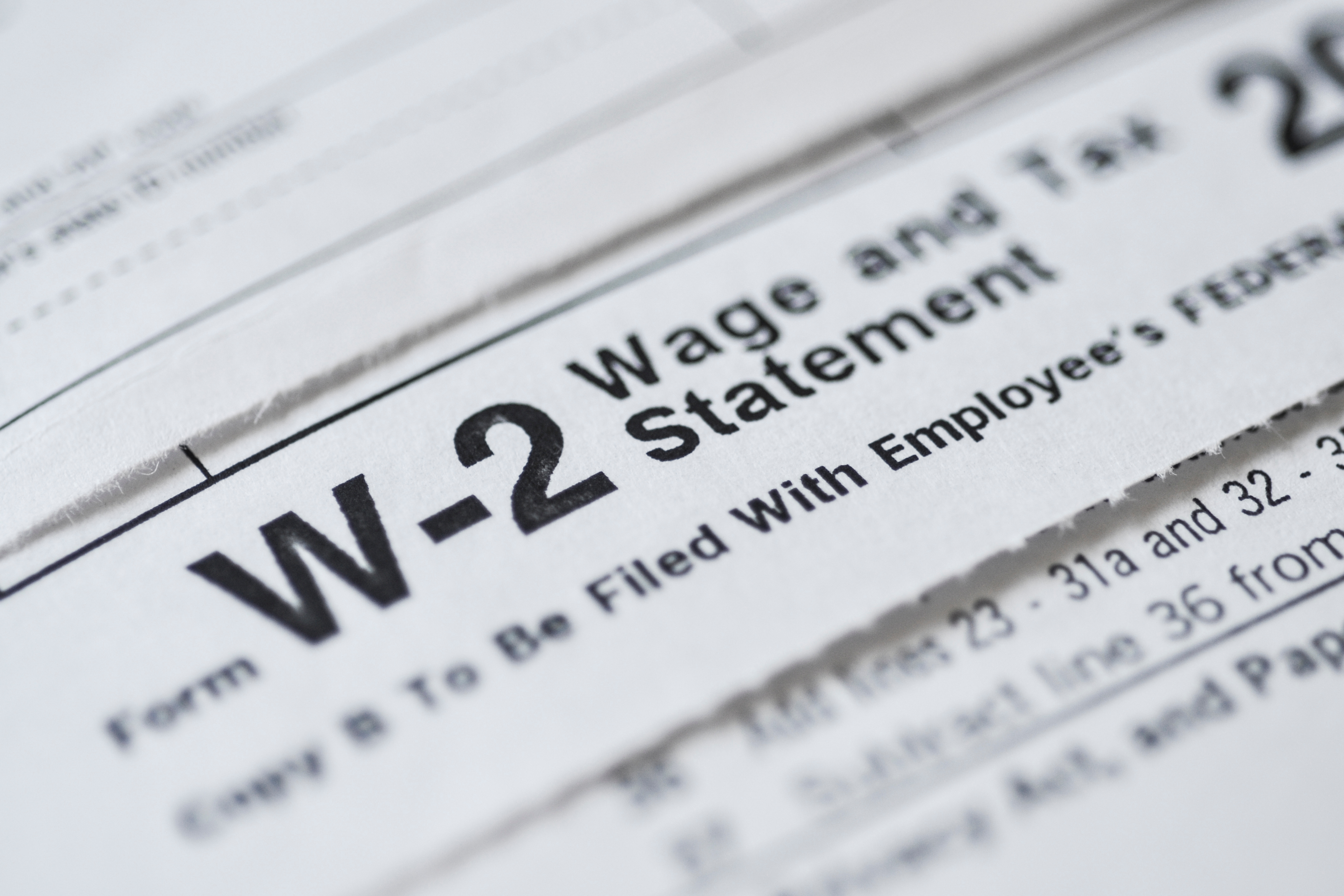
The IRS recognizes that payroll systems cannot change instantly, providing a tiered implementation period:
Phase 1: The 2025 "Safe Harbor"
For the 2025 tax year (filed in early 2026), the IRS allows reasonable methods" to estimate the deduction. You will not see a special box on the 2025 W-2; employees will instead use IRS formulas (like the "One Third Rule") or separate statements from their employer to claim the deduction.
Under Notice 2025-62 (issued Nov 5, 2025), employers will NOT face penalties for failing to separately report the new required information for 2025.
What is ONEHCM doing to help?
- For Qualified Overtime: You can provide a separate written statement detailing the total amount of qualified overtime compensation (specifically the premium "half" portion of "time and a half").
How to do this in OnePoint: Run the Earning/Deduction/Tax Listing (Summary) and filter to show all overtime and doubletime earnings by employee. Add a custom column to calculate the total premium amount for each employee.
- For Qualified Tips: Employees in "customarily and regularly" tipped occupations (as defined by the IRS) can benefit from these deductions. You can provide the employee's qualifying occupation code and a separate accounting of cash tips received.
How to do this in OnePoint: Run the Earning/Deduction/Tax Listing (Summary) and filter to show all tip earnings by employee.
Resources: View the official list of occupation codes here.
Phase 2: The 2026 Mandate
Starting January 1, 2026, the training wheels come off. Draft instructions for the 2026 Form W-2 require:
- Box 12, Code TT: The exact dollar amount of qualified overtime premium.
- Box 12, Code TP: The exact dollar amount of qualified tips.
- Box 14b: A new Treasury Tipped Occupation Code (TTOC) to identify the employee's specific service role.
What is ONEHCM doing to help?
- For Qualified Overtime: Weekly FLSA overtime premium hours must be recorded using a new earning code called “OBBBA Qualified OT Premium” to apply the correct amounts in W-2 Box 12 Code TT. While these entries will appear on internal payroll reports for reconciliation, they will not be visible on employee pay statements.
- If you are a Payroll customer using our Time Labor Management module, new pay calculation rules will be applied on the backend to move FLSA overtime data to your payroll records. More information about this functionality will be available in the near future.
- If you do not use our Time Labor Management module, you have the flexibility to enter or import these hours at whatever frequency suits your process. Additional information and support on this process will be provided in the near future.
- For Qualified Tips: The appropriate Box 12 code (TP or TT) will be applied to employee form W-2 depending on your organization’s Treasury Tipped Occupation Code (TOC) View the official list of occupation codes here.
3 Ways ONEHCM Turns Compliance into Connection
In the era of Human Connection Management, we move beyond seeing employees as "capital" to be managed and start treating them as partners to be supported. The OBBBA is a perfect test case for this philosophy.
Employees will be confused. They will ask, "Why didn't my Sunday double-time count?" or "How do I know my tips are being reported correctly for my deduction?" If your HR team can't answer, trust wavers.
1. The Power of "One Employee Record"
Because ONEHCM unifies Time & Attendance, HR, and Payroll into a single database, we don't lose data in translation.
-
Built-in worksheets for modeling compensation scenarios: ONEHCM provides configurable planning worksheets that let you simulate different overtime patterns, bonus structures, shift differentials, and tipped income scenarios. You can see the impact of state vs. FLSA interactions before you ever run payroll.
-
Incident tracking: Because all overtime, tips, bonuses, and schedule changes live on a single employee record, ONEHCM gives you a clear audit trail for every pay-impacting event.
2. Automating the Math
Forget the spreadsheets. The OBBBA requires calculating "Qualified" amounts that differ from gross pay. ONEHCM’s payroll engine automates these nuanced calculations:
-
Weighted Average & Bonus Blending: When you pay a performance bonus or shift differential, our system automatically recalculates the "Regular Rate of Pay" to identify the exact 0.5x premium required for Box 12, Code TT.
-
Tip Categorization: Our system distinguishes between voluntary tips (qualified for Box 12, Code TP) and mandatory service charges (non-qualified), ensuring your tipped workforce receives every cent of the tax deduction they are legally owed without manual intervention.
3. Building Trust Through Transparency
The ultimate goal of Human Connection Management is relational trust.
-
Smart Pay Stubs: ONEHCM allows you to deliver clear, transparent pay statements that show employees exactly what is happening with their pay.
-
Empowerment: By providing accurate data, you empower your employees to file their taxes with confidence, reinforcing that their employer is looking out for their financial well-being.
Protect Your Business from Compliance Risks
The One Big Beautiful Bill is complex, but it doesn't have to be chaotic. By leveraging unified technology, you can protect your organization from compliance risks while delivering a tangible financial win to your people.
When payroll, time, and HR data live in one system, you gain the precision needed to:
-
Separate FLSA-qualified premiums from state or contractual overtime.
-
Accurately track qualified tips versus service charges.
-
Produce the exact Code TT and Code TP amounts required on every W-2.
That accuracy translates directly into clearer pay statements, better-informed employees, and higher confidence, turning a high-stakes regulatory shift into a chance to demonstrate that you are safeguarding both your organization and your employees’ take-home pay.
Ready to see how ONEHCM can simplify your OBBBA transition? Request a demo today!
Subscribe to updates
Get the latest posts delivered to your inbox.